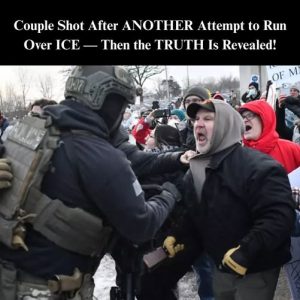
The fatal shooting of 37-year-old Renee Nicole Good by a federal immigration agent in Minneapolis has continued to send shockwaves through the city and across the nation, drawing intense scrutiny, political fallout, and a growing sense that the official narrative is shifting under pressure. What began as a single tragic incident on January 7 has now become a defining moment in the broader debate over immigration enforcement, use of force, and the fragile relationship between federal agencies and local communities. In the days following the shooting, Minneapolis was transformed by grief and anger. Vigils filled sidewalks with candles and flowers, while protesters gathered in the cold to demand answers and accountability. Renee was not simply a name in a news report; she was a poet, a mother, and a neighbor whose presence had been felt in her community. As video of the encounter circulated online, it fueled intense debate, with people pausing, rewinding, and analyzing each second in an attempt to understand how a routine enforcement operation could end in the death of a woman sitting in her own vehicle. The footage did not bring clarity so much as it deepened the divide, as viewers came away with sharply different interpretations of what they were seeing. For some, it appeared to show a dangerous confrontation; for others, it looked like a moment of panic and misjudgment that spiraled out of control. Either way, the images ensured that the story would not fade quietly.
In the immediate aftermath, senior federal officials moved quickly to defend the actions of the ICE agent involved. Their statements were firm and confident, presenting the shooting as a necessary response to an imminent threat. They described a chaotic scene in snowy conditions, a crowd forming, and an SUV allegedly being driven toward officers. In this version of events, the agent’s decision to fire was framed as an act of self-defense, consistent with training and policy. These early declarations set the tone for much of the national conversation, especially among those who believe federal agents operate in increasingly hostile environments and must make split-second decisions to protect themselves and others. Yet the certainty of these statements also drew criticism. Many people in Minneapolis felt that conclusions were being drawn too quickly, before all evidence had been reviewed and before independent investigators had a chance to weigh in. To them, the speed of the defense looked less like transparency and more like an attempt to close ranks and control the narrative. This perception only added to the mistrust that already existed between the community and federal law enforcement.
This week, however, a notable shift occurred when Homeland Security Secretary Kristi Noem acknowledged that Renee Good’s death was “preventable.” While she continued to maintain that the agent acted according to training, her words marked a departure from the earlier, more absolute defenses of the shooting. By describing the loss of life as preventable, Noem seemed to recognize that something had gone wrong, even if she stopped short of admitting wrongdoing or policy failure. For many observers, this change in tone was significant. It suggested that the pressure from the public, local leaders, and civil-rights advocates was beginning to register at the highest levels of government. Noem emphasized that any loss of life is tragic, a statement that resonated with those who have been calling for a more human-centered response to the incident. At the same time, her careful wording also highlighted the delicate balance federal officials are trying to strike: acknowledging the gravity of what happened without undermining the agency or prejudging the outcome of investigations.
Community leaders and civil-rights advocates seized on this shift as an opportunity to renew their calls for an independent investigation. They argued that the public deserved a full and transparent accounting of what happened, free from political influence or institutional bias. Questions about whether lethal force was truly necessary remain at the center of their concerns. Was there another way to resolve the situation without resorting to gunfire? Were de-escalation techniques properly used? Did the presence of multiple officers and the surrounding environment create options that were not fully explored? These are not abstract questions for the people of Minneapolis; they go to the heart of how safe residents feel in their own neighborhoods. Advocates also warned that public statements by powerful figures could prejudice ongoing reviews, shaping public opinion and potentially influencing investigators before all the facts are known. In their view, restraint and careful language are essential when a case carries such profound consequences for a grieving family and a divided community.
Former President Donald Trump added another layer of controversy when he weighed in after viewing the footage. He placed responsibility on Good, describing the scene as disturbing and claiming that she resisted officers and struck one of them with her vehicle. In a subsequent media interview, Trump repeated those assertions, calling the encounter “vicious.” His remarks were met with sharp criticism from local officials in Minneapolis, who argued that it was inappropriate to assign blame before investigations are complete. To them, Trump’s statements felt like an attempt to frame the narrative in a way that favored federal enforcement and dismissed the pain of a community in mourning. The clash between Trump’s rhetoric and the more cautious tone adopted by some current officials underscored the political stakes surrounding the case. Renee Good’s death has become not only a matter of law and justice but also a symbol in a broader struggle over how immigration enforcement is perceived and defended in the public sphere.
As multiple inquiries move forward, investigators are examining video evidence, witness accounts, and ICE procedures to piece together a clearer picture of what happened on that January day. Each frame of footage and each statement from those present is being scrutinized, not only for factual accuracy but for what it reveals about training, decision-making, and the culture of enforcement. For Renee’s family, these investigations represent a fragile hope that the truth will emerge and that her life will be honored through accountability. For Minneapolis, the process is part of a larger effort to rebuild trust in institutions that many residents feel have failed them too often. And for the nation, the case has become a focal point in an ongoing debate about how far enforcement should go, how power should be checked, and how society should respond when those entrusted with authority take a life. No matter what the final findings reveal, the impact of Renee Nicole Good’s death will endure, shaping conversations about justice, dignity, and the value of every human being long after the headlines fade.