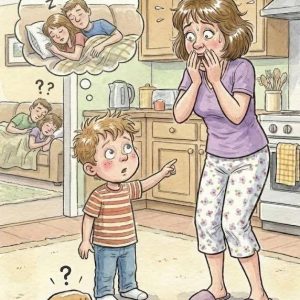
I’d always known my son Ben had a bigger heart than the world often rewarded. At twelve, he was all elbows and knees, forever coming home with scabs, snow-soaked boots, and an optimism that felt almost fragile in its purity. He believed adults meant what they said. He believed effort was always met with fairness. One snowy morning in early December, he burst into the kitchen with cheeks red from the cold and excitement. “Mom! Mr. Dickinson said he’ll pay me ten dollars every time I shovel his driveway!” he said, barely able to catch his breath. I remember smiling, not because of the money, but because of how proud he looked to be earning something on his own. In that moment, it felt like one of those small milestones parents quietly celebrate—the first taste of responsibility, the first sense of independence.
Ben threw himself into the work with a seriousness that amazed me. Every morning before school, he pulled on his boots and gloves, sometimes in the dark, sometimes while snow was still falling. He shoveled Mr. Dickinson’s driveway clean down to the pavement, careful not to leave ridges or piles near the garage. At night, he’d sit at the kitchen table counting his earnings in crumpled bills, already planning how he would spend them. He whispered his ideas to me like secrets: a red scarf for me because he’d noticed mine was fraying, a dollhouse for his little sister Annie, and maybe—if enough snow fell—a telescope so he could see the moon better. His pride wasn’t loud or boastful; it was quiet, glowing, and rooted in the belief that honest work mattered.
That belief cracked just days before Christmas. On December 23rd, Ben came home later than usual, his shoulders slumped in a way that made my stomach tighten before he even spoke. He dropped his shovel by the door and stood there, eyes wet, trying to be brave. “Mr. Dickinson said he’s not paying me,” he said finally. “Not for any of it.” He explained that Dickinson told him it was a “lesson” about contracts, that there had never been anything in writing, and that Ben should consider it preparation for the real world. I felt anger rise so fast it surprised me, but what hurt more was the look on my son’s face—confusion mixed with self-doubt, as if he were wondering whether he’d somehow deserved this. I pulled him into a hug and told him the truth as clearly as I could: “You did nothing wrong. This is on him, not you.”
That night, I barely slept. I kept thinking about the lesson Ben was absorbing in that moment—not the one Dickinson thought he was teaching, but the one that suggested kindness could be exploited and effort dismissed without consequence. By morning, I knew I couldn’t let that stand. I gathered our family and explained what had happened. No yelling, no threats—just action. We shoveled our own driveway first, then helped clear the sidewalks of a few neighbors who were struggling with the heavy snow. Finally, together, we carefully and deliberately moved the snow right back onto Mr. Dickinson’s freshly cleared driveway. Not messily, not spitefully—just thoroughly. Ben watched the entire time, quiet at first, then slowly smiling as he began to understand. This wasn’t revenge. It was balance.
When Mr. Dickinson stormed out of his house, red-faced and furious, we didn’t raise our voices. Neighbors paused, pretending to adjust scarves or scrape windshields, but everyone was watching. “What do you think you’re doing?” he shouted. I met his gaze calmly. “A lesson in labor,” I said. “Ben provided a service. You refused to pay for it. So now, you don’t enjoy the benefit of that work.” He sputtered about property and entitlement, but his words rang hollow in the cold air, especially with witnesses standing nearby. There was nothing illegal about moving snow, and nothing honorable about refusing to pay a child for honest work.
That evening, just as the sun dipped below the houses, there was a knock at our door. Mr. Dickinson stood there stiffly, envelope in hand. Inside was the full payment he owed Ben. He muttered something about misunderstandings and walked away without waiting for a response. Ben’s face lit up—not with triumph, but with relief. He counted the money once, then hugged me tightly. In that moment, I realized the real lesson had landed. He learned that his work had value, that integrity mattered, and that standing up for yourself—or for someone you love—doesn’t require cruelty, only courage.
The scarf and dollhouse were eventually bought, and yes, the telescope too. But those things were never the point. What mattered was showing Ben that being kind doesn’t mean being powerless, and that fairness sometimes has to be defended. The world will try to teach children hard lessons soon enough. This time, I wanted my son to learn one that stayed with him: that dignity is worth protecting, and that even in small, snowy moments, doing what’s right can change how you see yourself forever.