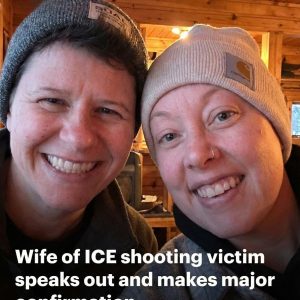
A quiet weekday morning in Minneapolis shifted abruptly into a moment of national focus after a fatal encounter involving federal immigration officers claimed the life of Renee Nicole Macklin Good, a 37-year-old mother of three. The incident unfolded on a snow-covered residential street, a setting that normally signals routine and calm rather than crisis. Neighbors awoke to flashing lights and urgent movement, the stillness of winter broken by confusion and disbelief. What began as a federal operation ended with a life lost, and the shock rippled quickly beyond the block, raising questions that would not remain local for long.
Authorities have confirmed that the circumstances surrounding the shooting remain under investigation, and officials have released only limited details so far. That absence of clarity has intensified public concern and prompted calls for transparency, with community leaders and civil rights advocates urging a full accounting of what happened and why. As the inquiry continues, the case has renewed debate over federal enforcement practices, the use of force, and accountability during operations conducted in residential neighborhoods. For many observers, the uncertainty has been as unsettling as the event itself, underscoring how trust depends not only on outcomes, but on openness in explaining them.
Beyond the headlines and official statements, Renee Good was remembered first by those who knew her for her creativity and compassion. She was an award-winning poet who received the ODU College Poetry Prize in 2020 while studying creative writing, recognition that reflected both technical skill and emotional depth. Her work explored memory, identity, and the fragile threads that bind people together, often drawing praise for its honesty and resonance. Her poems appeared in multiple literary publications, where readers encountered a voice attentive to nuance and the everyday textures of human connection.
Her artistic life extended beyond the page. Good co-hosted a podcast with her late husband, blending humor, reflection, and shared curiosity during a period of close collaboration. Friends describe those conversations as intimate and thoughtful, marked by warmth rather than performance. In parallel with her creative pursuits, she navigated a professional life that required resilience and adaptability, working over the years in healthcare support, finance, and property-related roles. She also volunteered as a legal observer, reflecting a commitment to community accountability and civic engagement that matched the values evident in her writing.
Family members say her most important role, however, was as a devoted parent. She was raising three children and was known for her attentiveness, patience, and deep commitment to their well-being and stability. Those closest to her speak of a mother who made time, listened carefully, and anchored her household with consistency and care. Having moved to Minneapolis from Missouri only months earlier, she was still building connections, yet neighbors recall her as friendly and engaged, often outdoors with her youngest child and quick to greet those around her. In a short time, she had begun to root herself in a new place.
As vigils and memorials continue across the city, many emphasize that Renee Nicole Macklin Good should be remembered not for the circumstances of her death, but for the life she lived and the impact she made. Candles, poems, and spoken tributes have highlighted her kindness, her creativity, and the quiet ways she showed up for others. While investigations proceed and debates over policy and accountability unfold, her community has focused on honoring her humanity—on preserving the memory of a poet, a parent, and a neighbor whose care and presence mattered. In doing so, they seek to ensure that her story is defined by dignity and meaning, even as unanswered questions remain.